Related photos
Hurricane season is the part of the year when small leaks turn into mold problems before anyone notices. Here is what actually matters in the first three days after a storm in Houston.
Houston sits at the wrong intersection for indoor moisture. Heavy storms drop several inches of rain in hours. Outdoor humidity rarely drops below sixty percent through summer. Roofs are flatter than what you see in dry climates, and the standard slab-on-grade construction does not give wet drywall anywhere to drain.
After a hurricane or a heavy storm, the wind and water exposure is only step one. The bigger problem is what happens to interior moisture during the next forty eight to seventy two hours, especially if power is out and the AC is not running. Without active dehumidification, indoor humidity can stay above seventy percent long enough for mold to start forming on damp drywall, behind baseboards, in carpet pads, and on insulation.
That is why a Houston home that took on water during a storm may not show visible mold for a week or two, and then suddenly the upstairs hallway smells musty and the wall by the closet is staining. The mold did not start when you saw it. It started when the moisture sat there too long.
Most studies on mold growth after water damage point to the same range. Visible mold growth on common building materials can begin within twenty four to forty eight hours of sustained moisture, and is often well established by seventy two hours. Houston conditions sit at the aggressive end of that range because the indoor air is already humid before the storm even hits.
What to do in that window depends on what got wet and how clean the water was. Rainwater coming through a roof is much different than sewage backup from a flooded street. Both need attention, but the response is not the same.
Before drying anything, stop the source if it is safe. A tarp on a damaged section of roof, a shutoff valve on a burst supply line, or sandbags on a doorway that is still seeping water will buy the rest of the response time to actually work.
Take photos. Wide shots, then close ups. Record the date and time. If you may file an insurance claim, the documentation you take in the first hour is more useful to an adjuster than anything you do later. Photos of standing water, soaked carpet, and visible water lines on drywall are the proof a claim usually relies on.
A common Houston mistake is renting a few box fans, pointing them at wet carpet, and assuming the room is fine because the surface dried. The drywall behind the baseboard, the carpet pad under the carpet, and the wall cavity behind the outlet are all still wet. That is where mold grows.
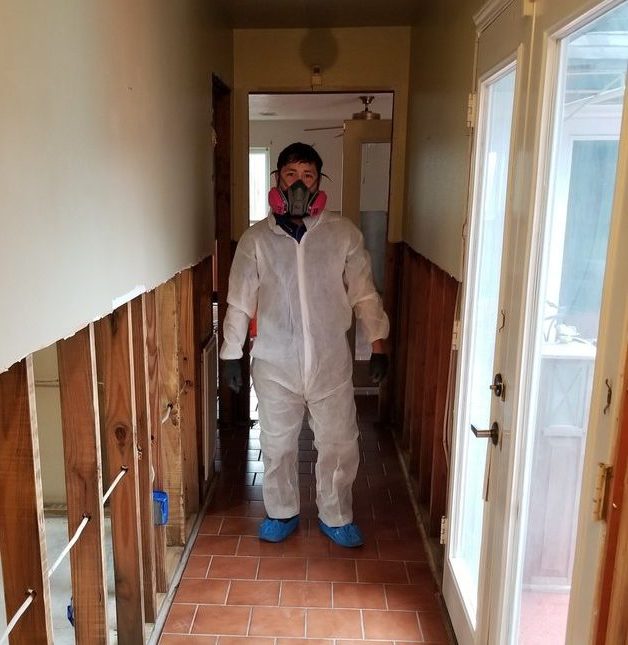
Drying decisions in the first three days usually fall into a few buckets. Saturated carpet pad is hard to save. Wet drywall below the flood line is usually cut out at twelve or twenty four inches above the wet line. Wet insulation almost always comes out. Wood framing that is structural can often be dried in place if the moisture content is brought below twenty percent within a few days.
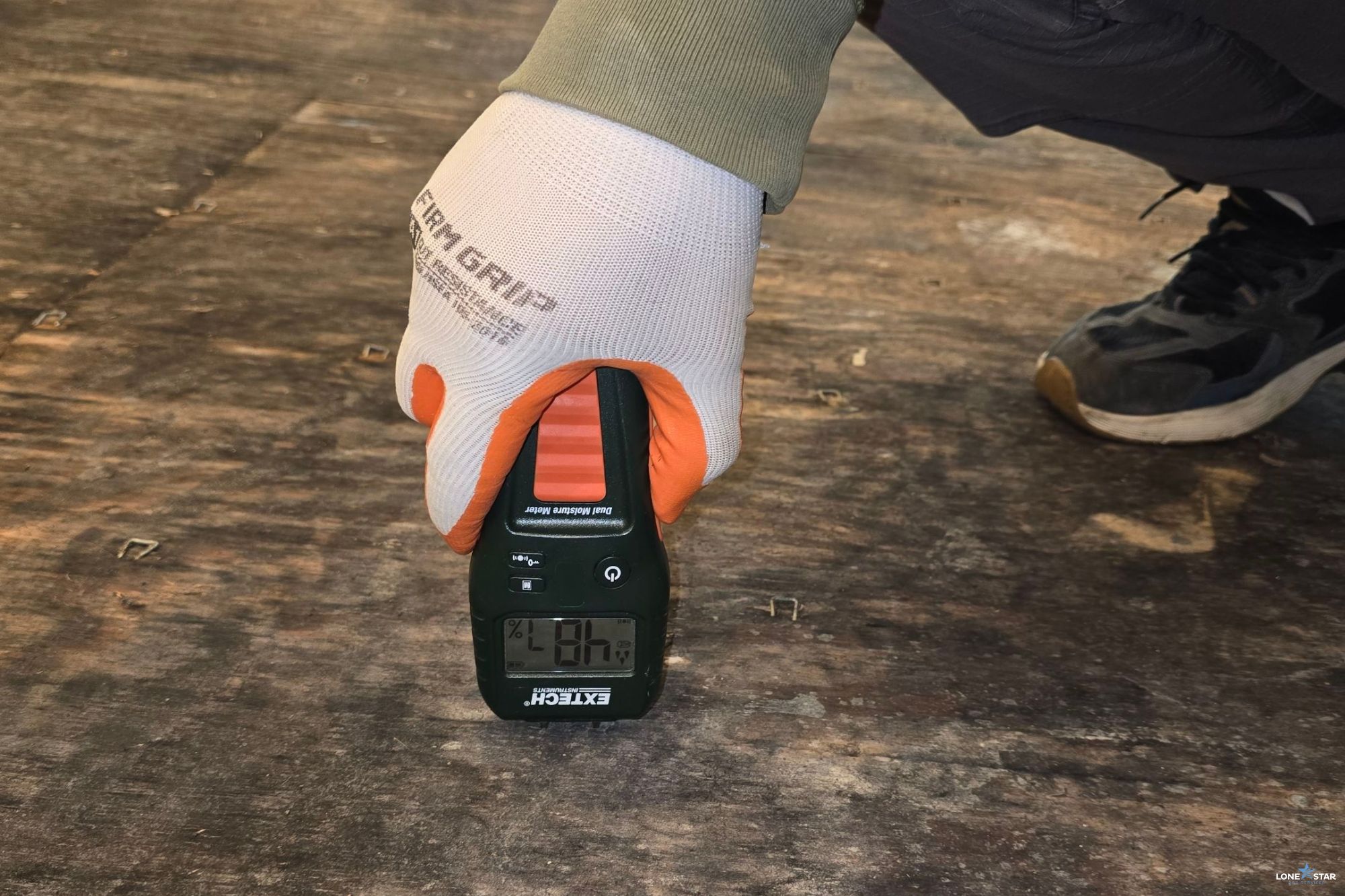
Without a moisture meter, you are guessing. With one, you can actually tell when the framing is dry enough to close back up. Cheap pin meters cost less than fifty dollars at hardware stores. They are not a substitute for professional assessment on larger losses, but they prevent the worst Houston storm-mold mistake of closing a wall back up while it is still damp.
A central AC running normally usually keeps interior humidity between forty five and fifty five percent in Houston. After a storm, if the system is not running, or it is running and circulating wet air through wet ductwork, indoor humidity can sit above seventy percent for days.
Portable dehumidifiers help in a single room. For a whole-house water event, the right move is a commercial dehumidifier sized to the actual square footage and water load. Most rental places in Houston stock them through hurricane season, but they are gone within twenty four hours of any major storm. Calling early matters.
If the AC is not coming back on for any reason, opening windows is usually worse than keeping the house closed. Outdoor humidity in summer is almost always higher than what you want indoors.
A licensed remediation contractor is the right call when one or more of these is true. The wet area is larger than ten square feet of contiguous wall space. There is visible mold growth already showing, especially behind baseboards, on drywall paper, or around vents. The water that came in was not clean rainwater, meaning it included sewage backup, river overflow, or contaminated outdoor runoff. The smell has gotten worse over the last few days even though the room looks dry.
Texas regulates mold work above a certain scope. The Texas Department of Licensing and Regulation oversees mold assessment and remediation rules. Above the regulated threshold, you may need a separate licensed mold assessment consultant for the protocol and clearance, and a separate licensed mold remediation contractor for the actual work. That is on purpose. The separation protects the homeowner.
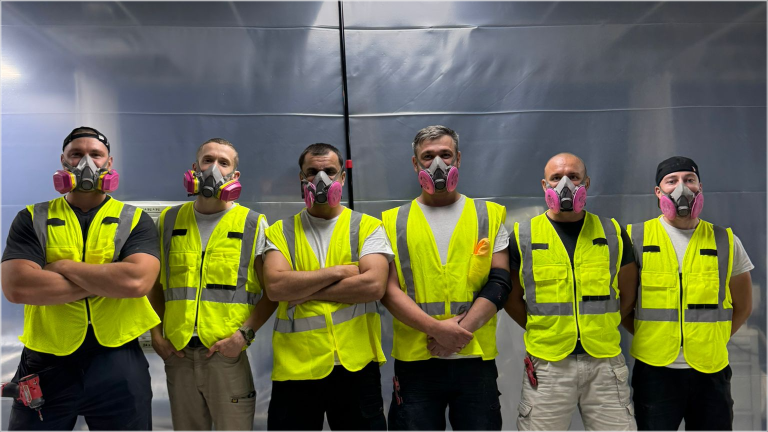
Lone Star Pro Services holds Texas Mold Remediation License RCO1401 and IICRC Certified Firm number 226009. On regulated jobs, we coordinate with independent mold assessment consultants for the assessment and clearance side. On smaller, non-regulated water events, we can handle the response directly.
Kingwood and Humble are the parts of Greater Houston where storm-related mold calls hit hardest. Both areas have flood history along the San Jacinto and east of 59. Homes that took on water during Harvey and Beryl are more likely to have already-compromised drywall and framing, which means a follow-up storm finds water-damaged materials faster.
Cypress, Spring, and Tomball calls usually start with roof leaks and attic moisture rather than ground water. Wind-damaged shingles let water into attics, the AC is then circulating humid air through the system, and a few weeks later the upstairs ceilings start staining.
Sugar Land, Pearland, Missouri City, and Katy calls are mostly slab leaks, AC drain problems made worse by storm power loss, and bathroom plumbing failures that were already weak before the storm hit.
The Woodlands has its own mix. Tree-shaded homes, tall roof pitches, and crawlspace-style construction in some neighborhoods all interact differently with storm moisture than the slab-on-grade Houston norm.
Before storm season starts, walk your roof or have it inspected. Loose flashing, cracked shingles, and missing soffit vents are the entry points that turn a normal storm into a mold problem. Have at least one tarp, a few rolls of tape, and basic tools accessible inside the home, not in the garage.
Know where your main water shutoff is and confirm it actually turns. Slab-on-grade Houston homes have shutoffs that can corrode if they have not been used in years. Check it on a normal Saturday, not during a storm.
Have the AC serviced before May. Drain pans, condensate lines, and air handler housings that are clogged or rusted out will overflow during long storm events. A serviced system gives you a working dehumidifier when you need it most.
Save photos of the home interior in normal condition. Wide-angle photos of each room, the attic, and obvious utility areas. They make insurance claims faster and clearer if you ever need them.
Mold can begin growing on wet building materials within twenty four to forty eight hours and is usually well established by seventy two hours. Houston humidity tends to push that timeline toward the faster end of the range.
Usually no. Outdoor humidity in Houston during summer is almost always higher than what you want indoors. If the AC is not running, a closed house with portable dehumidifiers is typically a better bet than open windows.
It depends on the policy and the cause of loss. Sudden, accidental water damage is more often covered than slow, hidden leaks. Mold remediation coverage varies and may have separate limits. Document everything and read the policy section on mold and water damage carefully.
No. Bleach does not solve the moisture source, can damage some materials, and disturbing the area without containment can spread spores. If you are seeing visible growth in more than a small surface area, the right move is to stop, contain it, and call.
Yes. Texas regulates mold assessment and remediation. Lone Star Pro Services lists Texas Mold Remediation License RCO1401.
On regulated mold projects, Texas rules may require an independent licensed mold assessment consultant for assessment, protocol, or clearance. Remediation should be handled separately when the rules require it.
Do not tear into the area or blow fans across visible growth. If water is still leaking, stop it if you can do that safely, then call for guidance.
Call 346-258-7165.
Lone Star Pro Services lists Texas Mold Remediation License #RCO1401. On regulated jobs, assessment and clearance may need to be handled by an independent licensed mold assessment consultant. That separation protects the property owner and keeps the project clean.
Mold Remediation License: #RCO1401
IICRC Certified Firm: #226009
HVAC License: TACLA00106049E
Operator: Lone Star Pro Services, Houston TX
Call or send the form. If the area is wet, say what leaked and whether the smell is getting worse.